Dr. Gymbro
←

#countermovement jump

2 articles
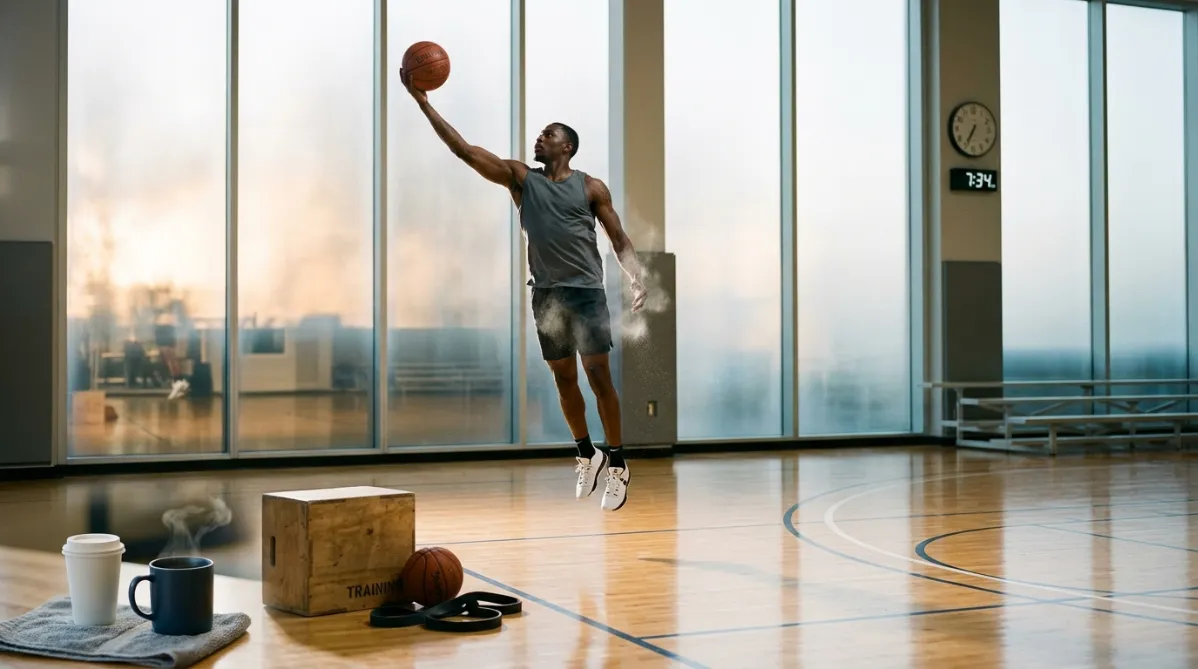
A wide, editorial-style photograph of a basketball player mid-air at the top of a vertical jump inside a sunlit indoor court, shot from a low angle so the athlete's silhouette rises against tall frosted windows glowing with soft morning light. The player wears a plain charcoal tank and white sneakers, with chalk dust drifting off their hands and catching the light. The polished honey-toned hardwood floor reflects the figure faintly, with crisp painted court lines leading the eye across the frame.

In the foreground at the lower left, slightly out of focus, a small wooden plyometric box sits on the floor beside a matte ceramic cup of black coffee and a plain white paper cup, placed neatly on a folded gray towel. Thin steam curls from the ceramic cup. They stand for the question of caffeine versus warm-up without any text or labels.

The color palette is calm and modern: warm amber wood, soft cream, muted slate blue shadows, and a touch of burnt orange from a basketball resting near the box. Light is natural and diffused, with gentle rim lighting on the athlete's shoulders and a shallow depth of field that blurs the background bleachers into creamy shapes. The composition has generous negative space on the right third, suited to a headline overlay, in a clean, contemporary magazine style with fine film grain, subtle contrast, and a quiet, focused mood. No text, no logos, no futuristic elements.
science research

Koffein vor dem Sprung brachte keinen zusätzlichen Effekt – das Aufwärmen erledigte die Arbeit

BY DR. GYMBRO ·

Coffein plus ein Drop‑Jump‑Aufwärmen klingt nach der perfekten Kombination für höhere Sprünge, doch eine neue Studie mit Elite‑Basketballspieler*innen zeigte, dass der Kaffee keinen zusätzlichen Nutzen brachte. Das individualisierte Drop‑Jump‑Programm erzeugte allein einen klaren, jedoch kurzlebigen Sprung‑Boost. 3 mg Koffein pro Kilogramm Körpergewicht veränderten weder die maximale Sprunghöhe noch den Zeitpunkt oder die gesamte PAPE im Vergleich zum Placebo. Die individuellen Reaktionen variierten stark, sodass manche Athlet*innen weiterhin anders reagieren könnten. Im Folgenden wird gezeigt, was die Studie belegt, was nicht und wie du deinen eigenen Sprung‑Primer zusammenstellst.
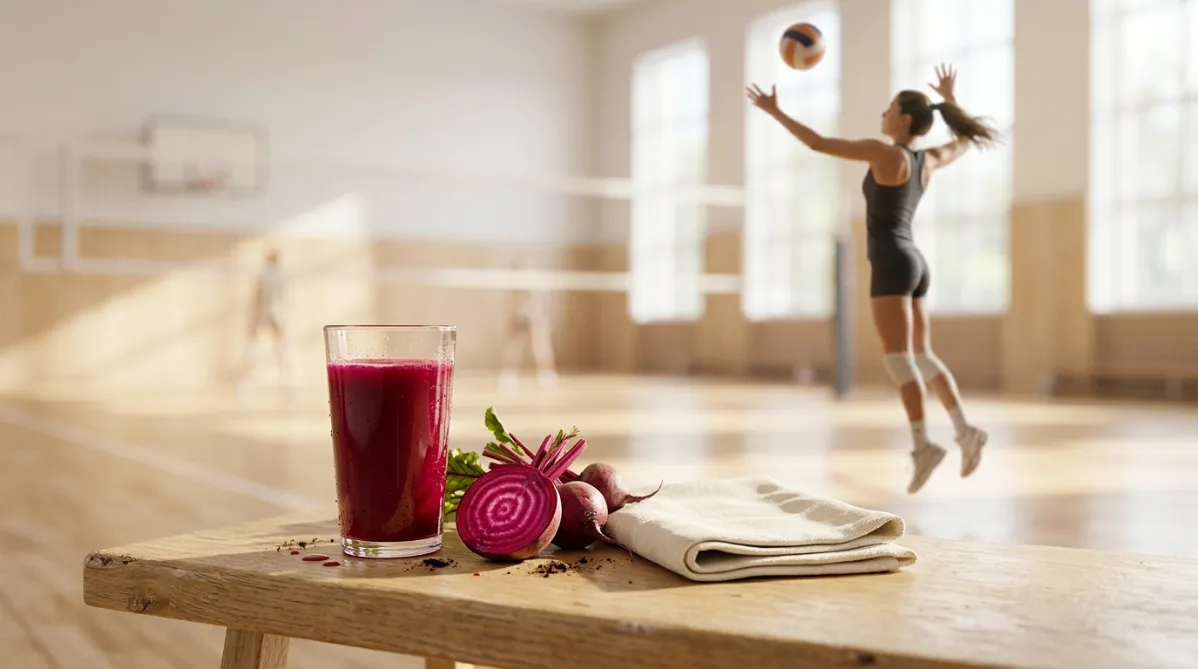
A wide, editorial-style photograph of a deep magenta glass of beetroot juice standing on a pale oak gym bench in soft morning light. Beside it sit a halved raw beetroot with vivid fuchsia and white concentric rings, a few whole beets with leafy stems, and a folded cream towel. Behind them, slightly out of focus, a female volleyball player in a fitted charcoal athletic set is caught mid-jump on an indoor court. Her arms are raised, her ponytail lifts, and a volleyball hangs near her fingertips. The polished wooden court floor reflects warm light from tall windows. The background fades into a creamy blur of pale wood tones, soft white walls, and hints of a net.

The composition follows a rule-of-thirds layout. The juice and beets fill the lower left third in crisp focus, and the jumping athlete is the softly blurred focal point on the right. Fine condensation beads on the glass, and a few juice droplets rest on the bench like small jewels. The palette is limited and modern: rich beet magenta, warm honey wood, soft off-white, and charcoal accents. The light is natural and diffused with gentle long shadows. The shallow depth of field suggests a high-end lifestyle and health magazine. The look is clean and minimal with plenty of negative space in the upper left for a title overlay. The mood is energetic yet calm, hinting at recovery and bounce. It has fine film-like texture and true-to-life color, with no text, logos, or futuristic elements.
nutrition

Rote‑Bete‑Saft und Sprunghöhe: Bringt der dritte Tag den Sprung zurück?

BY DR. GYMBRO ·

Zweihundert belastete Sprünge können die Beine fast vollständig erschöpfen. Doch könnte Rote‑Bete‑Saft am dritten Tag wieder Schwung verleihen? In einer neuen Crossover‑Studie mit weiblichen Volleyballspielerinnen zeigte sich nach 72 Stunden eine höhere Sprunghöhe und ein besserer Druckschmerz‑Schwellenwert in der Wade. Muskelkater, Agilität, Schwellungen und die meisten Kraftwerte blieben unverändert, und der Gesamteffekt auf den Sprung war nur ein Trend.

This page is available in